Tips and advice

What type of camera?

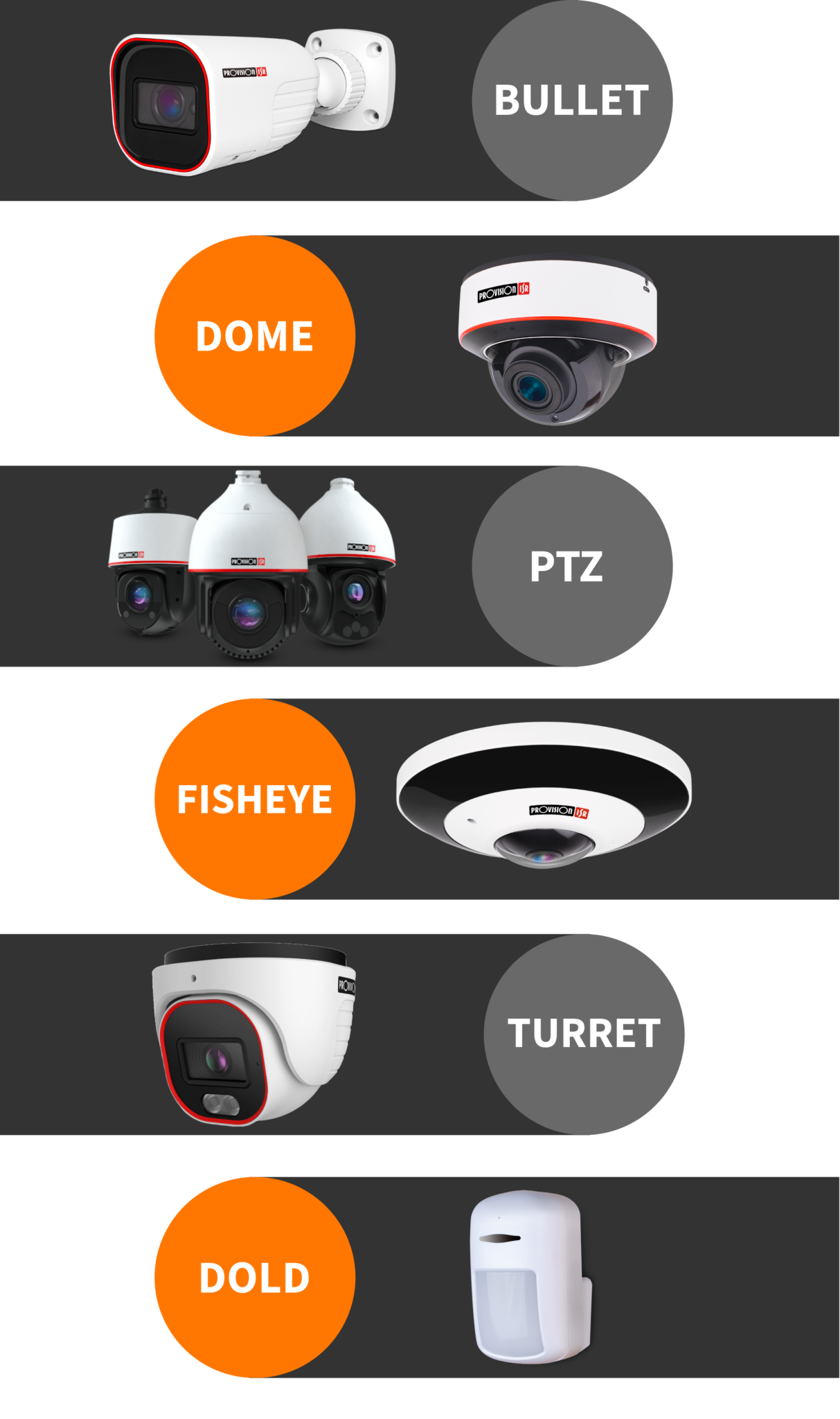
Surveillance cameras are usually labelled as Bullet, Dome, Fisheye, etc. Depending on how the camera is to be positioned, there are advantages and disadvantages to the different types. Which one you choose depends on several factors.

Common camera types and what sets them apart:
  1. Bullet camera: This type of camera has a tube-like shape and is usually adapted for outdoor use. It is easy to mount and usually has a fixed objective lens. Bullet cameras are discreet and can be used to monitor specific areas, such as entrances or car parks.

  2. Dome camera: Dome cameras have a round or hemispherical design and can be both indoor and outdoor. They are often equipped with a swivelling ball that allows flexible setting and adjustment of the image angle. Dome cameras are popular for monitoring larger areas, such as shops or offices, but have a more complex installation process.

  3. PTZ camera: PTZ stands for Pan-Tilt-Zoom and these cameras can pan, tilt and zoom in on specific areas. They are remotely controllable and can rotate 360 degrees horizontally and tilt up and down. PTZ cameras are useful when you need to monitor large areas and want to be able to focus the camera on specific events or objects.

  4. Fisheye camera: A fisheye camera has a wide-angle objective lens that provides an extremely wide angle of view, sometimes up to 180 or 360 degrees. It can provide a clear view of large areas and is often used to monitor larger spaces such as shops, warehouses or open spaces.

  5. Turret camera: A turret camera, also known as an "eyeball" or "mini-dome" camera, has a compact design with a spherical camera body and an adjustable camera lens. Turret cameras are usually outdoor-ready and can be mounted on roofs or walls. They offer great flexibility in installation and have a discreet and professional design.

  6. Hidden camera: A hidden camera, also known as a "spy" or "secret" camera, is intended to be as invisible as possible. It can be built into everyday objects such as clocks, smoke detectors or wall sockets. Hidden cameras are mainly used for discreet surveillance where it is important that the camera is not detected.

When buying a camera, you should consider the following factors:
  1. Location and environment: Decide whether the camera will be used indoors or outdoors and choose an appropriate level of protection for weather resistance and vandalism.

  2. Image quality: Check the resolution and image sensor to get high-quality images to suit your surveillance needs.

  3. Features: Consider what features you need, such as motion detection, night vision, audio recording, licence plate reading or remote access.

  4. Connectivity and storage: Make sure your camera has compatible connectivity options and choose a suitable storage solution, either in a local DVR/NVR device or in the cloud.

  5. Budget: Set a budget and compare prices and features from different manufacturers and retailers to find the best choice for your needs.

It may be beneficial to consult a professional surveillance system supplier or installer to get expert advice on which camera type and configuration best suits your specific requirements and environment.

CONTACT US

Not found what you're looking for?

The Surveillance Store's service team is ready to help you weekdays from 09.00 - 17.00. Whether it's advice, technical support or booking an installation, we're here to help you every step of the way. Don't hesitate to give us a call.

Call us directly on 031-125600 or 08-254999.

Want a demo of the products, see what we have in the range or discuss a case? Come and visit us and check out the products live in our showroom. We are located on Gruvgatan, just outside central Gothenburg (at Pågen's bread factory). The entrance is Gruvgatan 35B and then you easily take the lift to floor three. For the best service, we recommend that you book a meeting with one of our salespeople on 031-12 56 00 / 08-25 49 99.

Contact
