Identify your needs:
Evaluate why you need surveillance cameras and what areas you want to monitor. This could be entrances, car parks, warehouses or other areas of interest. This will help you decide how many cameras you need and what type of cameras are most suitable.
Check if a licence is required:
Private individuals who want to use camera surveillance themselves do not need to apply for a camera surveillance licence, as long as the camera surveillance complies with the requirements of the Camera Surveillance Act and the GDPR. It is what is captured on film that largely determines whether the surveillance is legal.
Companies wishing to use CCTV are not required to obtain a licence but must comply with the rules of the GDPR and the CCTV Act, unless they are performing a task of public interest in relation to the CCTV.
IMY is the supervisory authority responsible for monitoring compliance with the GDPR and the Camera Surveillance Act. Anyone who conducts camera surveillance must therefore comply with both the rules of the GDPR and the Camera Surveillance Act.
All camera surveillance, whether it requires authorisation under the Camera Surveillance Act or not, must comply with the requirements of the GDPR, which we go through in the section on GDPR.
Determine the best location:
Take time to carefully plan where the cameras will be placed. Identify locations with optimal coverage of the areas you want to monitor. Consider field of view, viewing angles and any obstacles that may affect image quality or surveillance effectiveness. Ensure that the cameras are placed in locations that provide a clear and unobstructed view of the monitored area.
Respecting privacy:
Avoid placing cameras in places where people have a reasonable expectation of privacy, such as bathrooms, changing rooms or other private spaces. Also respect the privacy of neighbours and avoid pointing cameras at their property without permission.
Sign about the surveillance:
To be in line with laws and regulations, put up clear signs indicating that surveillance is ongoing. This informs people that they may be filmed and helps to maintain transparency and reduce the risk of accidental invasion of privacy. These are available ready to buy from us in the online shop.
Security and protection:
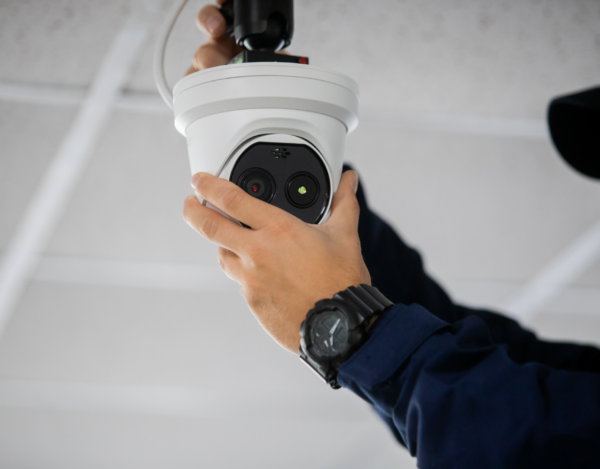
Make sure cameras are installed securely to prevent sabotage or theft. Place them at heights high enough to avoid them being reached or blocked. Protect the cameras with appropriate protective covers and consider using backup cameras for extra security.
Follow applicable laws and regulations:
Be aware of and comply with all applicable surveillance laws and regulations, including the General Data Protection Regulation (GDPR) and local privacy and surveillance laws. Ensure that data collected is processed lawfully and that you respect individuals' right to privacy. You can read more about this on our GDPR page.
Consult experts if needed:
If you are unsure about how best to position your surveillance cameras or if you need advice and assistance, contact a professional surveillance system supplier or installer. They can give you expert advice based on your specific situation and help you create an effective and legal surveillance solution. At The Surveillance Store, we offer both telephone advice and installation assistance by certified CCTV technicians.
By carefully considering these factors and following the recommendations for the placement of surveillance cameras, you can achieve the best possible surveillance protection while respecting the privacy of those in the monitored areas.